Out 10 December 2026 · Vintage, Penguin Random House India · Order now ›
O. P. SINGH
REC 00:17:04

The new book · 10 December 2026

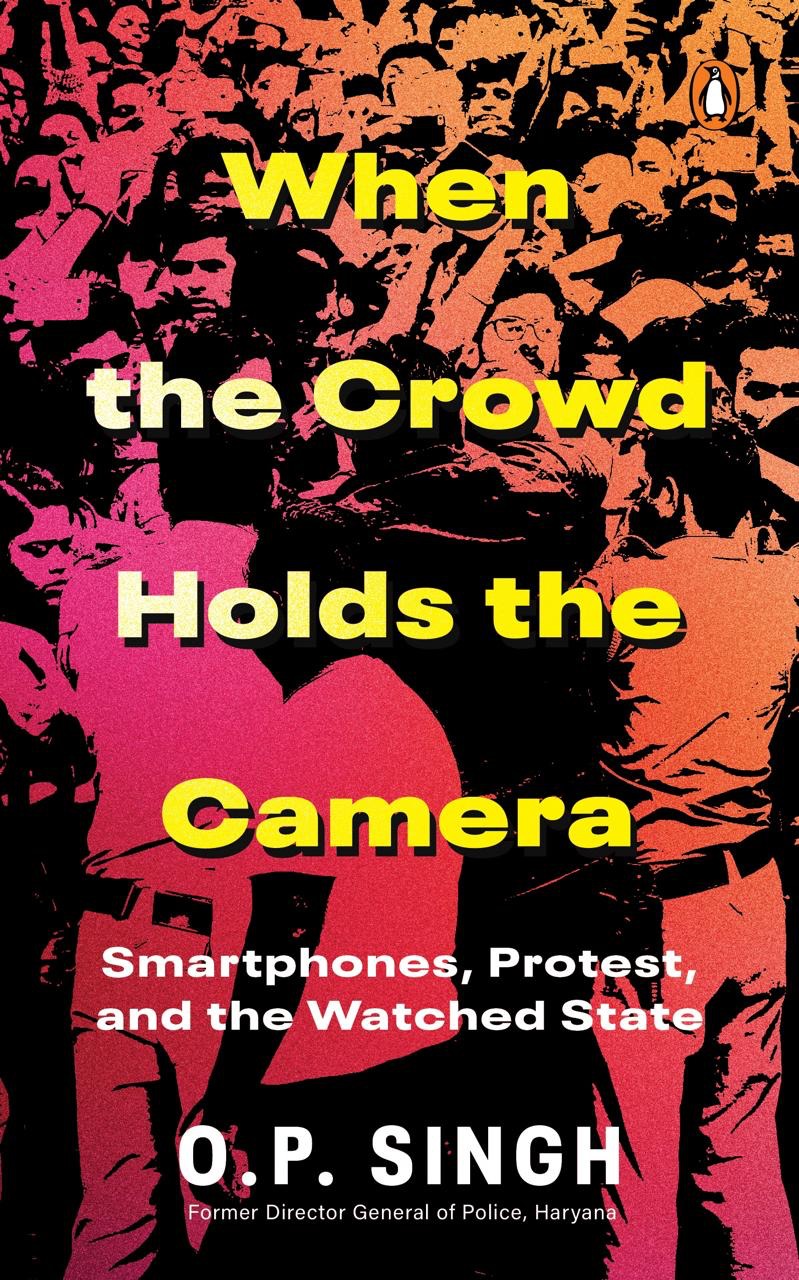
When the Crowd Holds the Camera

Smartphones, Protest, and the Watched State

For as long as states have existed, they have watched the crowd. When the crowd holds the camera, it is the State that is watched.

Cover of When the Crowd Holds the Camera by O. P. Singh

Three questions

Why can a twenty-two-second clip fill a square by evening, with no leader to call it?

Why are the young now at the front, from Nairobi and Jakarta to Jantar Mantar?

And what can be built so that a protest born on a phone stays peaceful on the street?

Why I wrote it

I stood in front of crowds for thirty-three years.

I always held that government and people are server and served. So I went to meet people long before they arrived as a crowd. I asked districts to run marathons, and fifty thousand people came to one start line. I opened city streets to families for Raahgiri. I sent policemen out in T-shirts.

Then the phone arrived, and the crowd changed. It needs no office and no leader now. It films everything, and the film travels faster than any order I could give.

This book is what I learnt on both sides of that change. I neither praise the new crowd nor fear it. I explain it from the inside: a lens for understanding, and a set of tools for building. It is for the young, the uniformed and everyone watching.

Inside the book

Five parts, one argument

Part I

Why We Gather

The science of crowds, from Le Bon’s Victorian mob to what researchers know today. People gather for safety, belonging and voice. Which one is in front of you decides everything.

Part II

The Smartphonians

How the camera, the smartphone and a young generation rewrote protest. Why the rumour has a head start, and why the internet shutdown fails.

Part III

Why Force Fails

Three capitals, three years, one script. What Kandela taught me. And the hard questions, answered straight: appeasement, the foreign hand, China.

Part IV

From Control to Design

What the head constable knew. The view from a footbridge in Hisar. Why each death in a crush was a decision, not a panic. And a toolbox any district can use.

Part V

Meeting the Crowd

What to do when the crowd does come to fight: act on the violent few, and leave the peaceful many alone.

With a Field Annexe for the morning itself. See the full contents ›

“The opposite of crowd control is not chaos. It is crowd design, and what design builds is trust.”FROM CHAPTER 11

Praise for the book

What those who have led forces say

“… what a police force that knows its community can achieve”

Prakash Singh
author of The Struggle for Police Reforms in India

“A field commander’s book about the battles that need never be fought”

K. Vijay Kumar
author of Veerappan: Chasing the Brigand

“… the State should meet its citizens long before they arrive as a crowd … this is the book India needs”

Thomas Mathew
author of Ratan Tata: A Life

“… vivid accounts from a life in policing make it an engaging read”

Meeran Chadha Borwankar
author of Madam Commissioner

From the book

Three scenes

A glass of water

A sit-in by journalists, ended by a head constable’s joke and a glass of water. The idea this book turns on is in that moment.

Chapter 11

The footbridge

Hisar, November 2016, before dawn. Months earlier the state had torn itself apart. I stood on a footbridge and looked down at a road packed shoulder to shoulder, teenagers and grandmothers together. At six a flag dropped, and they ran.

Chapter 12

The tree across the highway

In Kandela, farmers felled a tree across the road over unpaid electricity bills. The state read a political argument as a traffic problem and sent the police. Scores were hurt. Nothing was settled.

Chapter 9

About the book ›

Watch

The other kind of crowd

A word from the author, in his own hand. Forty seconds.

Watch the Hisar and Ambala marathons on YouTube ›

The launch

Delhi, 10 December

The book is launched in Delhi on Thursday, 10 December 2026. Details of the evening will be posted here.

Leave your email and I will write to you on the day, once. No spam.

Keep me posted

O. P. Singh

The author

O. P. Singh

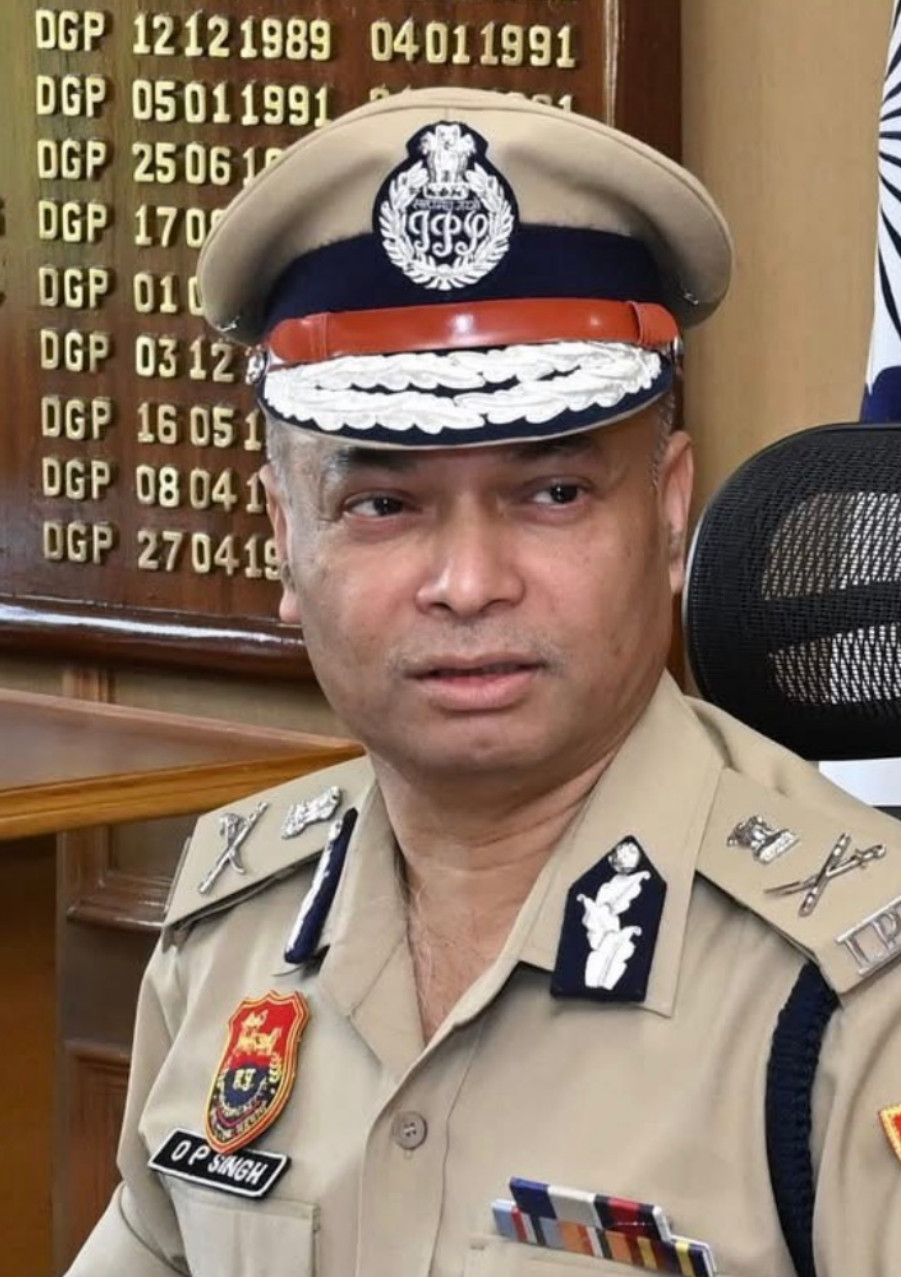
O. P. Singh joined the Indian Police Service in 1992. Over thirty-three years he held every significant office the service had to offer, and signed off as the 41st Director General of Police, Haryana.

Some of his most lasting work happened far from the command chair: SPAT, the state’s sports scholarship programme for schoolchildren; Raahgiri, the open streets; and the district marathons. As a police leader he kept asking one question: why wait for people to arrive as a crowd?

He helped frame the rules under India’s anti-money-laundering law, served on a United Nations mission, and holds the President’s Police Medal for Meritorious Service and for Distinguished Service. Trained in psychology, economics and English literature, he lives in Gurugram.

Bios and photographs for the press ›
Tools from the book

Take it to work on Monday

In the press

On this subject

For interviews, extracts and review copies: the press kit ›

Also by O. P. Singh

Say Yes to Sports · Hauslanama (Hindi) · Jin Dhoondha Tin Paiyan (Hindi) · On the Record: Selected Newspaper Writings

Forthcoming: The Fear Tax and The Audacity of Order.

Follow

New essays, and one note on publication day.